Tuina Anmo: Acupuncture with the hands
Focus on the individual
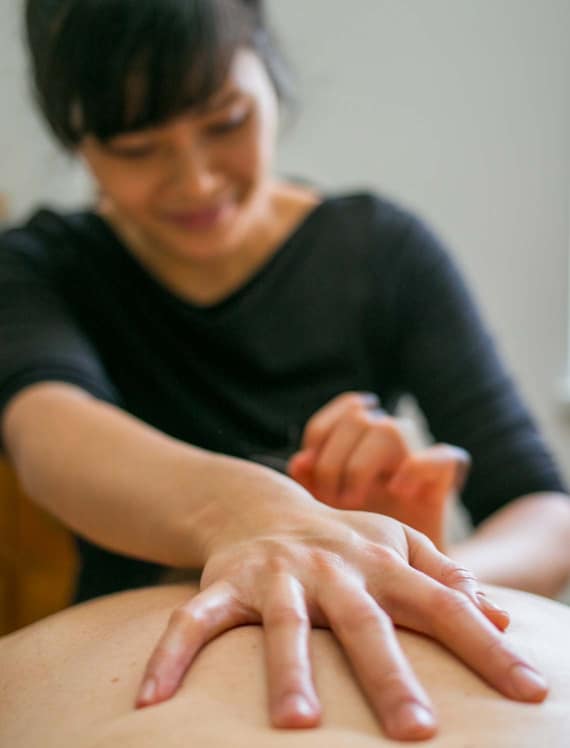
Tuina Anmo, or simply Tuina, is the manual therapy of Traditional Chinese Medicine (TCM) and has its origins in Chinese massage, orthopedics and traumatology. Tuina is one of the five classical healing arts of TCM: acupuncture, dietetics, herbal medicine, Qi Gong and, of course, Tuina. The syllables Tui, Na, An, and Mo define the four main techniques of this unique treatment method: TUI means to push, NA to grasp, AN to press, and MO to stroke in a circular motion. In China, "Tuina” is generally understood to refer to the chiropractic manipulation of the musculoskeletal system, whilst “Anmo” involves the massage of soft tissues, including the skin, fascia, muscles, ligaments, and tendons.
Outside China - including here in Austria - Tuina is generally offered as a health-promoting and soothing massage in group practices, studios, wellness hotels or spas.
As in acupuncture, Tuina Anmo works on the meridians - the body-wide network that, like a road network, connects all the body`s functions. The acupuncture points on the meridians are stimulated with the hands to support the body in dealing with all kinds of external and internal ailments. This means that Tuina Anmo can be used as a complementary treatment for almost all known and emerging conditions (such as Long Covid and Fatigue Syndrome), during convalescene, and for post-operative discomfort.
The “Tuina Anmo Practitioner", as the profession is called in Austria, always assesses how the patient is currently feeling and what therapeutic measures need to be taken. This is done by interpreting the tongue, pulse, and physical characteristics (posture of the musculoskeletal system, palpation of the tissue and reflex zones, etc.), from which a differential diagnosis according to TCM (Bian Zheng) can be derived.
Of course, current complaints, previous illnesses, dietary habits, and living conditions are also included in the TCM anamnesis. Based on this, an individual treatment plan is created – probably the greatest strength of TCM.
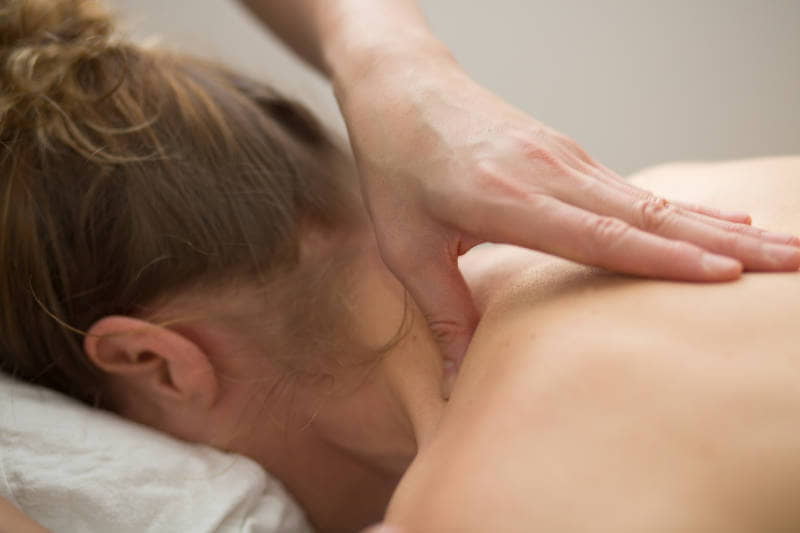
Therapeutic effectiveness of Tuina Anmo
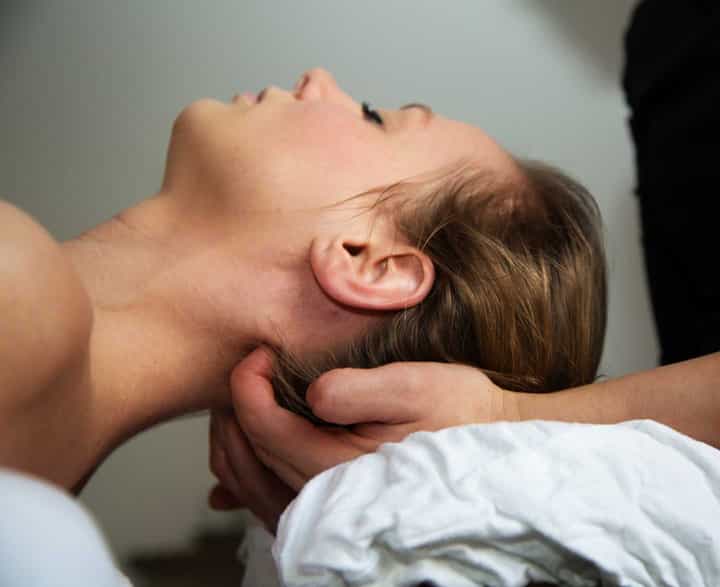
Finally, treatment of the musculoskeletal system is carried out either in the direction of the flow of Qi (pronounced "Tschi") in the meridians or against it. This means the technique is either tonifying or sedating. In TCM, Qi flows in a continuous cycle either upwards towards the head or downwards towards the feet. Tuina massage techniques are applied over large areas or locally at acupuncture points or trigger points, both specifically and reflexively. The intensity varies from gentle to firm, always dynamic and rhythmic, sometimes at a high frequency, but always adapted to the individual´s constitution and symptoms.
However, unlike in acupuncture, where the TCM practitioner inserts needles into the acupoints of the Primary channels, the Tuina Anmo pracitioner treats the Sinew channels. These are the outer layers of the body, i.e. the muscles, ligaments, tendons and fascia. The therapeutic effectiveness of Tuina Anmo is therefore based on restoring the flow of Qi in the Sinew channels by breaking down adhesions, remove stagnation, realign tissues and joints. And since everything in the body is connected to everything else via fascial structures, Tuina massage has an energetic and functional effect on both external and internal imbalances.
Qi, the Chinese term for life energy, flows through our bodies like electricity and acts as a spark that ignites the system, as the English TCM practitioner Dr. Daniel Keown aptly describes in his book The Spark in the Machine. According to Chinese philosophy, the free flow of Qi through the meridians is considered a prerequisite for health and vitality.
Much like the wind, Qi is invisible, but one can feel its effect when it flows in the wrong direction (such as with hiccups), is insufficient (exhaustion), stagnates (diffuse, wandering pain) or is blocked (localised pain). Our biological electricity drives all cellular functions, and where there is plenty of Qi, there is vitality.
Why does the heart beat? And why do we beam from ear to ear when we are happy? The ancient Chinese gave this luminosity of Qi the name “Shen”. Every TCM practitioner strives for a balance between Yin and Yang, the two primal forces of life itself. Or, to put it in Western terms, the pursuit of homeostatic equilibrium.
TCM – empirical healing art with its own nomenclature
Traditional Chinese Medicine is a holistic empirical medicine with a history dating back thousands of years. It has its origins in Daoism (Laozi), Confucianism (Confucius) and Buddhism and is a treasure trove for those who open themselves to it: Today, we benefit not only from knowledge of acupuncture and dietetics and medicinal herbs, but also from folk medicine (Gua Sha, cupping, moxibustion), martial arts (Kung Fu, Tai Chi, Qi Gong) and Feng Shui (pronounced Fong Shue), the teaching of harmony. TCM attempts to restore the energetic balance of the human being as a whole with the help of its own diagnostic system (Bian Zheng). Similar to mind mapping, this provides a wonderful guide for understanding the connections and the techniques to be used. The focus is not on the disease, but on self-regulation and the health of the body.
For me, the beauty of TCM lies in its precision through efficiency, logic, and its didactic strength in being able to explain complicated processes in a simple way. Complaints are first classified according to 8 therapeutic guidelines (Ba Gang): Yin or Yang, internal or external, deficiency or excess, cold or heat. The art lies in recognizing the changing dynamics between the phenomena of the 5 elements (Wu Xing, pronounced Wu Sching) and intervening therapeutically in the event of disturbances. In the West, this form of simplification is often dismissed as too esoteric. But perhaps this is only because people in China think and feel in visual terms. In contrast, comparatively young, modern medicine relies exclusively on numerological results and derives its knowledge from evidence-based studies. In my opinion, this is also an attempt to simplify complicated biological processes.
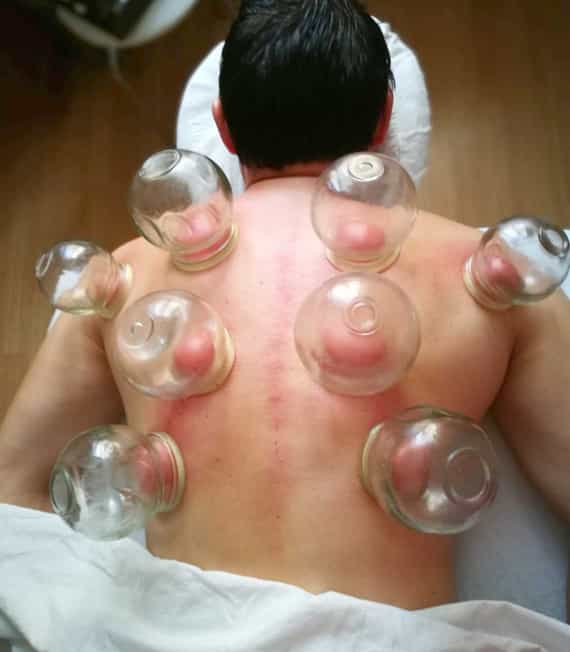
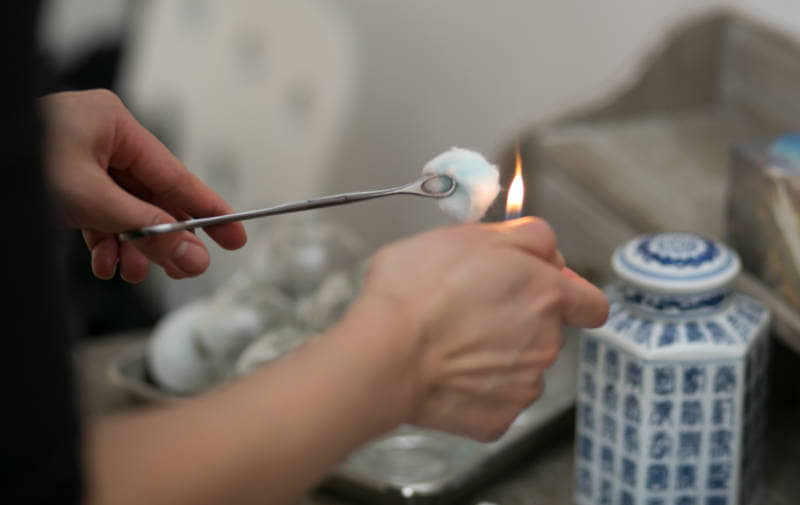
Ancient healing arts preserved for humanity
A brief excursion into history: Tuina developed from Anmo, which means massage. Both terms are often used synonymously in modern Chinese usage. The earliest archaeological writings on Tuina date back to the Shang Dynasty, around 1800 BC. The great classic of massage, “Huang Di Qi Bo An Mo Shi Juan” (Ten Volumes of Massage by Huang Di and Qi Bo) from “The Yellow Emperor”, the Huang Di Nei Jing, is unfortunately untraceable and is only known from quotations by other authors. The famous historical standard work Huang Di Nei Jing was probably written between 475 and 221 BC, but is said to have been written as early as 2600 BC by Huang Di and his advisors. Incidentally, the Sinew channels (Chinese: Jing Jin) are mentioned in the Huang Di Nei Jing, Su Wen, and described in more detail in Ling Shu, Chapter 13.
Sun Simiao, probably the most important and popular TCM doctor in Chinese history (581-682 AD), left behind a 30-volume treatise on the medical practice of his time, among other things. His work “Recipes Worth a Thousand Pieces of Gold” (Bei Ji Qian Jin Yao Fang, published in 652 AD) is considered the first encyclopedia of traditional Chinese medicine. It contains not only a collection of 4,500 herbal recipes, but also recommendations for the treatment of internal and external diseases, writings on gynecology and pediatrics, pulse diagnosis, acupuncture, moxibustion, nutrition, poisoning, and Tuina massage. Sun Simiao wrote about what every manual therapist today knows as a trigger point (Ashi, pronounced Ah Sherr): “When the practitioner touches a point and the patient cries out A-H, the Ah Shi point has been found.”
Holistic thinking in everyday therapeutic practice
In today's China, TCM is offered in hospitals on an equal footing with modern medicine. It is taught as part of a five-year medical degree (Tuina, herbs, acupuncture), after which trainees are guided in clinical practice by professors with decades of experience. The two worlds do not compete with each other, but complement each other for the benefit of patients. In my opinion, this is how ancient traditions can be successfully reconciled with modern people and their current ailments. The Chinese are simply pragmatic.
What can I do for you? And what can you do for yourself?
As a millennia-old manual therapy of TCM, Tuina Anmo primarily helps with complaints of the musculoskeletal system. Tuina Anmo can be used preventively to actively support your body and positively influence your tension, restricted movement, menstrual cramps, digestive problems, sleep disorders, and many chronic illnesses.
Taking a holistic approach, you can use the insights of modern and traditional medical systems equally for your own benefit. And please remember to consult your doctor to rule out any serious illnesses.
My first teacher of Eastern naturopathy, who was also an excellent diagnostician and, according to ancient tradition, a master of martial arts with hundreds of students, always said: “TCM gives people back responsibility for their own bodies.”
With this in mind, I invite you to learn about TCM methods so that you can take care of your own well-being and health.